
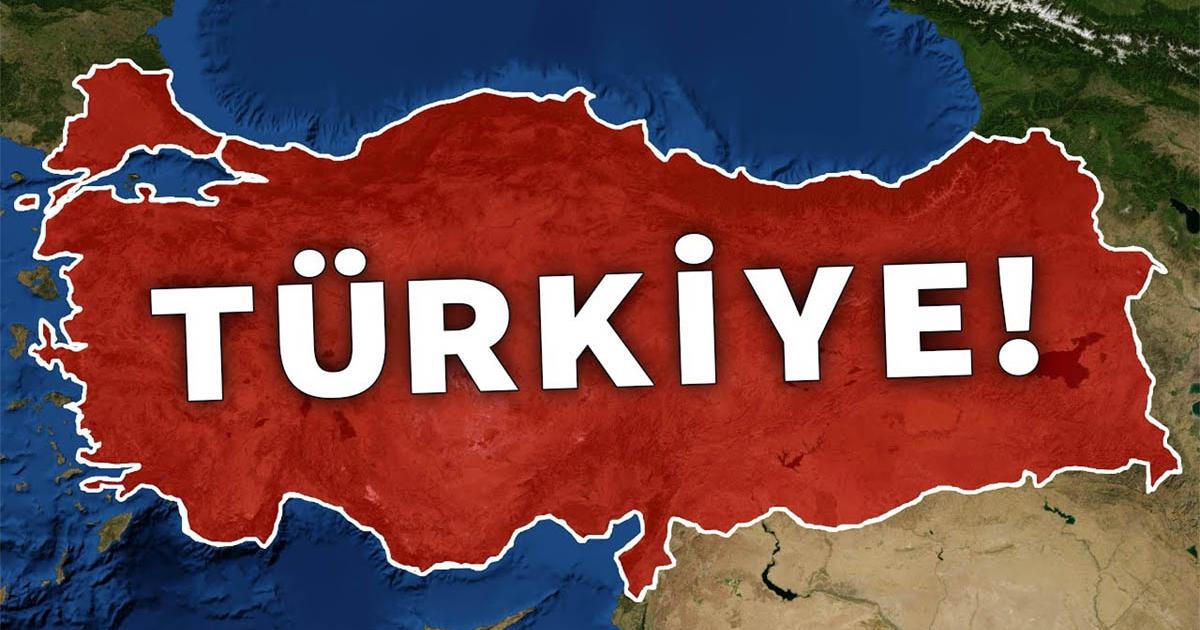
Türkiye: The Bridge That Is More Than a Bridge
Level: C1
There are countries that sit quietly on the map, and then there are countries that seem to sit at the centre of history itself. Türkiye is the second kind.
Located between Europe and Asia, bordered by the Black Sea, the Mediterranean, and the Aegean, Türkiye has been a crossroads of empires, religions, languages, trade routes, and political tensions for thousands of years. Its geography is not simply a location, it is destiny.
But to understand modern Türkiye, we must look beyond postcards of Istanbul’s skyline or Cappadocia’s hot-air balloons. The real story is deeper: a country constantly negotiating between tradition and reform, secularism and religion, nationalism and globalisation.
From Empire to Republic
For over 600 years, the Ottoman Empire ruled vast territories across Europe, North Africa, and the Middle East. Its capital was Istanbul, once known as Constantinople, which had previously been the heart of the Byzantine Empire.
The fall of the Ottoman Empire after World War I changed everything. In 1923, Mustafa Kemal Atatürk founded the modern Republic of Türkiye. His reforms were radical and deliberate: he abolished the monarchy, introduced secular laws, changed the alphabet from Arabic to Latin script, and promoted Western-style education and dress.
Atatürk’s vision was clear, to modernise Türkiye and align it more closely with Europe. Yet even today, the tension between secular identity and religious tradition remains one of the country’s defining political debates.
A Geopolitical Balancing Act
Türkiye’s strategic position makes it a key player in global politics. It controls access to the Bosporus Strait, a narrow waterway connecting the Black Sea to the Mediterranean, a route vital for international trade and military movement.
As a member of NATO and a candidate (though stalled) for European Union membership, Türkiye often balances relationships between Europe, Russia, the Middle East, and Central Asia. Its foreign policy sometimes appears pragmatic rather than ideological, adapting to circumstances rather than following a single fixed alliance.
This balancing act is not simple. Türkiye faces internal and external pressures: regional conflicts, refugee flows (particularly from Syria), economic challenges, and diplomatic tensions. Yet it remains a country that cannot be ignored in global discussions.
Istanbul: A Living Symbol
Few cities in the world reflect historical layering like Istanbul. Standing inside the Hagia Sophia, one can observe Christian mosaics alongside Islamic calligraphy, visual proof of centuries of transformation.
The city connects two continents via bridges that cross the Bosporus. Ferries move between Europe and Asia in minutes. It is possible, in a single afternoon, to drink tea in a traditional market and then sit in a modern art gallery discussing global design trends.
Istanbul represents Türkiye’s complexity: cosmopolitan yet traditional, innovative yet deeply rooted.
Economic Ambition and Modern Challenges
Modern Türkiye has invested heavily in infrastructure, manufacturing, construction, and tourism. Major airports, highways, and new residential developments reflect economic ambition.
However, economic volatility has also shaped recent years. Currency fluctuations, inflation, and foreign investment concerns have tested stability. Many young professionals aspire to global opportunities, while others focus on strengthening national industries.
This dynamic creates a powerful question: how does a country protect its sovereignty while participating fully in a globalised economy?
Culture: Continuity and Change
Culture in Türkiye carries layers of influence Turkic, Persian, Arab, European, and Mediterranean. Turkish cuisine alone tells this story: from kebabs and baklava to meze and fresh seafood.
Music ranges from classical Ottoman compositions to contemporary pop. Television dramas produced in Türkiye are watched across Europe, Latin America, and the Middle East, shaping perceptions of Turkish life.
Family ties remain strong, yet urbanisation is changing patterns of living. Women’s roles, generational expectations, and rural-urban identities are all undergoing transformation.
Türkiye, in this sense, is not static it is evolving in real time.
Identity in Motion
Perhaps the most fascinating aspect of Türkiye is its evolving identity. Is it European? Middle Eastern? Asian? A unique civilisation entirely its own?
The answer is not fixed.
Türkiye challenges the idea that national identity must fit neatly into one category. Instead, it shows that identity can be layered, negotiated, and continuously redefined.
In a world increasingly divided by rigid borders and simplified labels, Türkiye stands as a reminder that geography and history rarely create simple identities.
Definitions
Secularism – the separation of religion from government and public institutions
Geopolitical – relating to politics influenced by geography
Volatility – a situation of rapid and unpredictable change
Sovereignty – the right of a country to govern itself independently
Cosmopolitan – including people, ideas, and influences from many different parts of the world
Conversation Starters
How does geography shape a country’s political power?
Can a nation successfully balance tradition and modern reform?
Should religion influence politics in a modern state?
What are the advantages and risks of being a geopolitical “bridge” between regions?
How does national identity change over time?
Is it possible for a country to belong to multiple cultural regions at once?
How does economic instability influence young people’s decisions about their future?



-
-
2 months
Tagged society, South America