
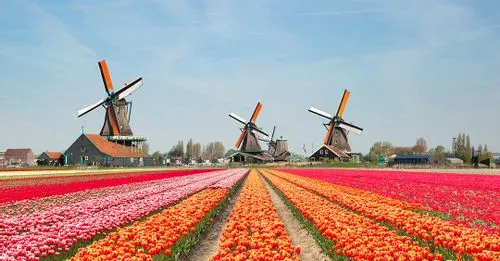
The Netherlands: How a Low Country Became a High Influence
Level: B2
When people think of The Netherlands, they might picture windmills, tulips, wooden shoes, or canals. But this small European country is much more than these familiar images. The Netherlands, often called Holland in everyday speech, has played a major role in world history, global trade, art, engineering, and modern culture. Its influence is far greater than its size might suggest.
A Land Below Sea Level
About one-third of the Netherlands lies below sea level. Sea, rivers, and rainwater have long shaped Dutch life. To prevent flooding, Dutch people built dikes, canals, and pumping systems that move water from low lands into the sea. This engineering mastery is not just local; it has influenced how other countries manage water and climate challenges.
The Dutch word for land reclaimed from the water is polder, land that was once underwater and is now safe for farms, homes, and towns. The Dutch essentially turned challenges into strengths, creating fertile fields and new communities on land others thought uninhabitable. This history of human ingenuity meeting environmental pressure is a powerful example of adaptation and planning.
The Netherlands and the Birth of Global Trade
In the 17th century, the Netherlands became one of the richest and most powerful countries in the world, long before the rise of Britain or the United States. The Dutch East India Company (VOC) was one of the first multinational corporations in history. It built trade routes between Europe and Asia, moved goods and spices, and introduced financial innovations like stocks and bonds that formed the basis of modern markets.
Amsterdam, the capital, became a global financial centre. The world’s first stock exchange was established there, and its influence spread as trade connected continents, products, and cultures. The strength of Dutch trade helped spread ideas, goods, and knowledge across the world.
Culture, Art, and Global Imagination
The Netherlands has produced some of the world’s most respected artists. The painter Rembrandt is known for his powerful use of light and emotion, while Vincent van Gogh created colourful, expressive works that resonate across time and cultures.
Today, Dutch museums like the Rijksmuseum and the Van Gogh Museum in Amsterdam attract visitors from all over the world. These institutions preserve masterpieces and make art accessible to millions of people each year.
Everyday Life: Bikes, Cities, and Social Values
The Netherlands is also famous for its cycling culture. Bikes are not just for tourists, they are a central part of daily life. People ride to school, to work, to shops, and even to cafés. Cities like Amsterdam and Utrecht have more bicycles than cars. Well-designed bike lanes make cycling safe and efficient. For many Dutch people, a bike is the easiest way to move around town.
Dutch society often values practicality, openness, and equality. Public transport, healthcare systems, and social services aim to support citizens with fairness and accessibility. Waiting lists, healthcare quality, and social infrastructure often compare favourably with other advanced nations.
Tradition and Modernity
Tulips and windmills remain powerful cultural symbols, but the Netherlands also embraces modernity in science, sustainability, and innovation. Dutch designers and architects are known for functional yet elegant solutions, whether in housing, technology, or infrastructure.
For example:
- Dutch architecture integrates old canals with new materials and shapes
- Sustainable design focuses on renewable energy and efficient use of space
- Urban planning prioritises public areas and human-friendly transport
This blend of old and new, tradition and innovation, helps explain why the Netherlands often feels familiar and forward-looking at the same time.
A Global Citizen in a Small Country
The Netherlands is also politically active worldwide, participating in international organisations like the United Nations, European Union, and International Court of Justice in The Hague. This city is sometimes called the “legal capital of the world” because many important international legal institutions are based there.
Because Dutch people speak English widely and Netherlands has a multicultural population, the country often acts as a bridge between cultures. Whether it’s international students, global companies, or cultural exchanges, the Netherlands continues to connect people and ideas on a global scale.
Definitions
Ingenuity – the ability to solve difficult problems in a clever way.
Multinational – a company that operates in many different countries.
Infrastructure – the basic physical and organisational systems of a country (roads, water systems, transport).
Sustainability – the quality of being environmentally responsible and lasting over time.
Multicultural – involving or representing many different cultures.
Conversation Starters
Why is it surprising that a small country like the Netherlands had such a big impact on global trade?
How do water management and engineering shape national identity in the Netherlands?
What lessons can other countries learn from Dutch city design and cycling culture?
Why are museums like the Rijksmuseum important for global culture?
How does speaking multiple languages help people live in a diverse, globalised world?
What are the benefits and challenges of living below sea level?
If you could design a city for the future, what elements from the Netherlands would you include?




-
-
1 month
Tagged Business, Technology