
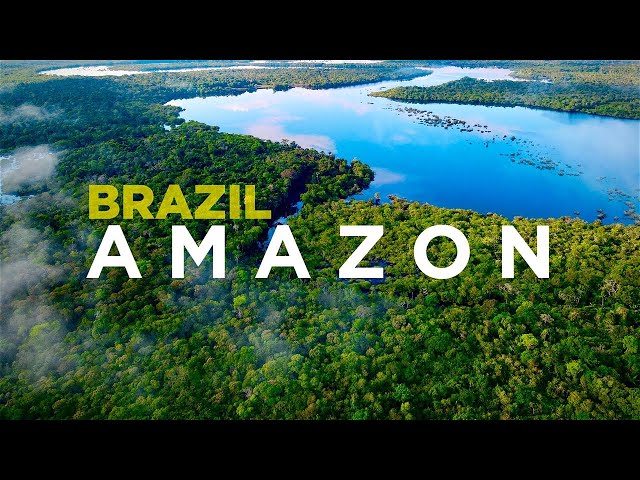
The Amazon Rainforest: Brazil’s Greatest Treasure and Greatest Challenge
Level: B2
When you hear the word Amazon, what comes to mind? Perhaps giant rivers, dense jungle, colorful birds, or even daring explorers. The Amazon Rainforest is one of the most famous places in the world, and for good reason. It is often called the “lungs of the Earth” because it produces huge amounts of oxygen and plays a vital role in regulating the planet’s climate. But the Amazon is more than just nature, it is also central to Brazil’s culture, economy, and global importance.
Why the Amazon Matters
The Amazon Rainforest covers about 5.5 million square kilometers, making it the largest tropical rainforest in the world. It is home to an estimated 10% of the world’s species, including jaguars, macaws, sloths, and countless insects. Many of these species are endemic, meaning they cannot be found anywhere else.
For local communities, including Indigenous peoples, the Amazon is not just a forest, it is home, medicine, and food. They live in harmony with nature, using plants for medicine, rivers for water, and forests for shelter. Many of these communities have lived in the Amazon for centuries, passing down knowledge and traditions.
The Amazon also has global importance. Its trees absorb carbon dioxide, a gas that causes climate change. Scientists say that destroying the forest too quickly could make it harder to fight global warming, and even affect weather patterns far from Brazil.
Challenges: Deforestation and Environmental Pressure
Despite its importance, the Amazon faces many challenges. Deforestation cutting down trees for farming, cattle ranching, and mining has increased in recent years. Every year, thousands of square kilometers of forest are lost. This not only affects animals and plants but also Indigenous communities who depend on the forest for survival.
Illegal logging is also a problem. Some companies take wood without permission, while fires are sometimes set deliberately to clear land. Environmentalists warn that if deforestation continues, parts of the Amazon could turn into savanna grasslands, rather than rainforest. This would have severe consequences for biodiversity and climate worldwide.
Life Along the Amazon River
The Amazon River is another treasure. It is over 6,400 kilometers long, making it one of the longest rivers on Earth. Many communities rely on the river for transport, food, and water. Some people live in floating houses or move along the river in boats called canoas.
Fishing is a main source of food. Local markets sell fresh fish, fruits, and forest products, connecting people and nature in a delicate balance. Tourists who visit often marvel at the natural beauty and the traditions that have survived for centuries.
Scientific Value: Medicines, Research, and Knowledge
The Amazon is also a giant laboratory for scientists. Many plants there have unique chemicals used in medicine. For example, some plants are being studied to treat malaria, cancer, or infections. Researchers believe the forest may still hold thousands of unknown species with potential medical benefits.
Indigenous knowledge is invaluable in this research. Tribes have used certain plants for healing long before scientists arrived, showing that traditional wisdom is often as powerful as modern science.
Global Awareness and Action
International organizations, governments, and environmentalists are working to protect the Amazon. Some programs promote sustainable farming, eco-tourism, and forest reserves. Public awareness campaigns encourage people worldwide to understand the importance of this rainforest.
Brazil faces a difficult challenge: balancing economic development with environmental protection. The Amazon provides resources and opportunities, but protecting it ensures long-term survival for local communities, wildlife, and the planet itself.
Key Takeaways
- The Amazon is vital for biodiversity, climate, and human culture.
- Indigenous communities maintain traditions that are hundreds of years old.
- Deforestation and illegal activities threaten its survival.
- Scientists study plants and animals for medicine and knowledge.
- Global efforts aim to protect the forest, but challenges remain.
The Amazon is not just a forest, it is a living, breathing treasure of Brazil and the world, full of mysteries, lessons, and hope for the future.
Definitions
Endemic – a plant or animal that lives in only one place.
Deforestation – the cutting down of trees in forests.
Indigenous – people or cultures that are original to a region.
Biodiversity – the variety of plants and animals in a place.
Sustainable – something that can continue for a long time without harming the environment.
🗣️ Seven Conversation Starters
Why is it important to protect forests like the Amazon?
How do local communities benefit from living in forests?
What are the consequences if the Amazon continues to be deforested?
Have you ever visited a rainforest or a similar natural environment? What was it like?
How can countries balance economic development and environmental protection?
Why might indigenous knowledge be valuable to modern science?
Can you think of other places in the world that are as important as the Amazon? Why?



-
-
1 month
Tagged society, South America