
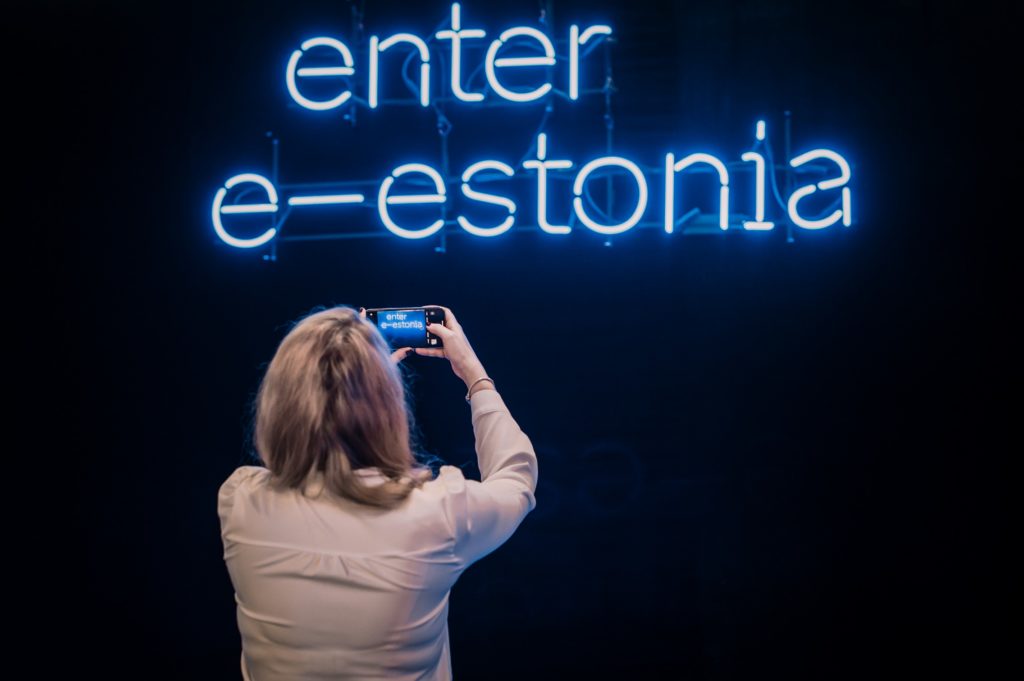
How Estonia Became One of the World’s Most Digital Countries
Level: B2
When you imagine a digital society, you might think of online shopping, social media, or maybe banking apps. But Estonia a small Baltic country with just over 1.3 million people has taken the idea of a digital country much further than almost any other nation in the world. In Estonia, almost every government service, from paying taxes to voting, is available online. This isn’t a modern convenience tacked onto old systems. It’s the operating system of the country itself.
The Digital Transformation: From Post-Soviet State to e-Estonia
After regaining independence from the Soviet Union in 1991, Estonia faced a challenge: how to build a modern, efficient state from scratch. With limited resources, the country chose technology and innovation as pillars of its future development.
Estonia made a bold decision: instead of keeping traditional, paper-heavy government systems, it designed its institutions to work online from the start. The idea was simple but powerful, to let citizens interact with the state through digital identities. This enabled people to do almost anything online, safely and securely.
Digital Identity: The Key to Everything
At the heart of Estonia’s digital success is the digital ID card, issued to almost every citizen. This card isn’t just an identity document, it’s a secure online passport for government and private services. Estonians use it to:
- file taxes
- open bank accounts
- access health records
- sign legal documents
- even vote online in national elections
All of this happens with strong encryption, a digital signature, and a secure authentication system that verifies identity while protecting privacy.
In 2005, Estonia became the first country in the world to allow secure, binding internet voting in a public election. In the 2023 parliamentary elections, more than half of all votes were cast online, marking a major milestone in digital democracy.
Daily Life in a Digital Country
So what does this mean for everyday life for an Estonian?
Imagine waking up, having breakfast, and then, without leaving your home, you:
- submit your income tax return in minutes
- check your family’s health records
- update your business registration
- sign contracts with clients abroad
All of these actions can be done online in a matter of minutes. This “once only” principle, where citizens no longer have to resubmit the same information to different government departments, has dramatically reduced bureaucracy and saved enormous amounts of time.
Estonia even tracks that its digital systems have saved the equivalent of hundreds of years of annual work time by removing unnecessary paperwork.
e-Residency: Digital Citizenship Without Borders
Estonia’s digital ambition expanded even further in 2014 with the launch of the e-Residency program, a global first. Unlike normal residency, e-residency does not grant citizenship or physical residence. Instead, it gives people anywhere in the world a secure digital identity that allows them to:
- establish and manage a company online
- access Estonia’s digital services
- sign documents with legal validity in the EU
- run a business remotely from home
By 2025, tens of thousands of people from over 170 countries had become e-residents, and more than 30,000 companies had been registered through the program, many in tech, consulting, e-commerce, and digital services sectors.
This program has created new economic growth, strengthened Estonia’s global influence, and attracted innovators and entrepreneurs, turning a tiny country into a global digital hub.
Startups, Innovation, and Economic Growth
A digital state has naturally helped inspire a strong startup culture. Estonia is the birthplace of world-famous tech companies such as Skype and Wise (formerly TransferWise), and there are thousands of active tech startups supported by digital infrastructure and easy access to online services.
This environment encourages creativity, experimentation, and global collaboration, because founders know that administrative tasks like company registration or document signing can be handled digitally and securely.
Trust, Privacy, and Security
Despite Estonia’s digital success, trust and security have always been essential. To ensure citizens trust the system, Estonia built strong legal frameworks and technical protections that let individuals:
- keep control of their data
- see who accesses their information
- use secure log systems to track any changes
This level of transparency, showing people exactly who used their personal data and why, is rare and helps overcome common fears about government surveillance or misuse of information.
However, debates about privacy and potential risks, especially around cybersecurity and digital voting, continue in Estonia and across the world. Some experts raise concerns about how much data governments hold and how to balance convenience with personal freedom.
The Bigger Picture: What the World Can Learn
Estonia’s digital society is more than a clever piece of engineering, it’s a vision for how governments and citizens might interact in the 21st century. It shows that digital transformation can reduce bureaucracy, improve efficiency, and create global economic opportunities.
Yet it also raises big questions about digital trust, the role of government, and how other nations might adopt or adapt similar systems. Many countries look at Estonia as a pioneer, but few have fully followed its path, partly because such a transformation requires not just technology, but cultural trust and legal protection.
For learners of English and global citizens alike, Estonia’s story is a fascinating example of how big ideas + smart policy + technology can change everyday life for millions of people.
Definitions
Encryption – a way of changing information into a secret code so only authorized people can read it.
Bureaucracy – official procedures and rules that sometimes make work slow or complicated.
Infrastructure – the basic systems and services (like internet, electricity, government platforms) that support a society.
Authentication – the process of proving that someone is really who they say they are.
Transparency – openness and clarity in how something works, especially so people can trust it.
🗣️ Seven Discussion Starters
What part of Estonia’s digital society would you find most useful in your life? Why?
Should voting online become common in other countries? What are the risks and benefits?
How does technology change the way people interact with their government?
What challenges might a country face when going fully digital?
How does Estonia’s e-Residency program help entrepreneurs and businesses?
Do you trust online government systems? Why or why not?
What lessons can larger countries learn from Estonia’s digital transformation?





-
-
1 month
Tagged Business, Technology