
From Ancient Civilisations to Modern Megacities: Mexico’s Story
Level: B2
Mexico is a country of contrasts. It is a place where ancient civilisations once built great cities and empires, where corn and chocolate were first eaten, and where, today, millions live in vast modern urban areas like Mexico City, one of the largest cities on Earth. This fascinating blend of history, culture, and daily life makes Mexico a unique place that invites curiosity and wonder.
We are going to use this article to try and show how Mexico’s past still lives in its present, from the streets of Mexico City to the flavours of its food, from the symbols on its flag to traditions like Día de los Muertos (Day of the Dead). Along the way, we’ll see how ancient knowledge still shapes modern identity, and how a megacity continues to build on its deep roots.
The Birth of a Great City: Tenochtitlan
More than 700 years ago, a group of indigenous peoples known as the Aztecs or Mexica arrived in the Valley of Mexico. According to legend, they were guided by a divine sign: an eagle on a cactus eating a snake. This image became the foundation of their new city and today lives at the centre of Mexico’s national flag.
In 1325, the Mexica built their capital on a small island in Lake Texcoco. The city, called Tenochtitlan, grew with complex canals, artificial islands (called chinampas) for farming, and towering temples at its centre. Over the next two centuries, the Aztecs developed a powerful empire with advanced agriculture, trade networks, and a rich cultural life.
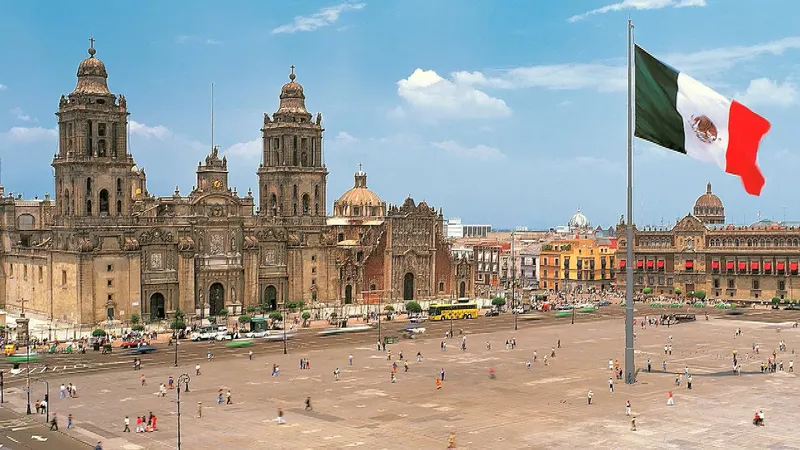
The Spanish conquest in 1521 destroyed much of Tenochtitlan, but the city’s legacy survived. Today, Mexico City stands over the same location, with modern buildings rising above ruins that reveal centuries of history. The main square, or Zócalo, still lies where the Aztec capital’s heart once beat.
Ancient Food, Modern Tables
The influence of ancient civilisations goes far beyond ruins and myths, it lives in the food people eat every day. Long before European contact, cultures like the Aztecs, Maya, Zapotecs, and others grew corn (maize), beans, and squash, ingredients still central to Mexican cuisine.
Corn was not just food; it was central to life and culture. The Aztecs ate tortillas, tamales, and maize gruels, and cultivated crops with advanced methods. Many staples of global cuisine, chilies, tomatoes, chocolate, and avocados, trace their origins to this region.
Modern Mexican food celebrates this history. Across markets and street stalls in Mexico City, Oaxaca, Puebla, and other regions, you’ll find both ancient flavours and dishes created after the Spanish arrival. Oaxacan cuisine, for example, is famous for its variety of moles, rich sauces with deep flavours and hundreds of years of history behind them.
Mexico City: Ancient Roots, Modern Life
Mexico City today is a megacity, a sprawling metropolis with millions of residents. But beneath its modern skyline lies a deep cultural memory. Walk through the historic centre and you’ll see pre-Hispanic ruins beside colonial buildings, with modern art and contemporary culture woven into the mix. Museums like the Templo Mayor Museum display artefacts from Aztec life right in the heart of the present-day city.
In neighbourhoods like Xochimilco, ancient waterways still shape daily life. These canals once helped feed Tenochtitlan, and today visitors can cruise them on colourful boats while seeing evidence of old farming practices that supported one of the greatest cities of the Americas.
Life in Mexico City, and Mexico more broadly, brings together history and modernity:
- Work and education: Millions commute for jobs, attend universities, and build careers in a global economy.
- Family and community: Family ties remain strong, with food and gatherings playing key roles in daily life.
- Festivals and tradition: People celebrate both national holidays and ancient rituals, combining old and new meanings.
This blend of worlds makes Mexico City a place of constant discovery and reinvention.
Celebrations of Life and Memory
One of the most captivating traditions in Mexico is Día de los Muertos (Day of the Dead), celebrated on November 1st and 2nd each year. Unlike the somber mood associated with death in many cultures, Mexico’s approach is joyful, colourful, and deeply emotional, focusing on remembering loved ones and celebrating their lives.
Families build ofrendas (altars) decorated with marigold flowers, candles, photos of the departed, and favourite foods and drinks. Pan de muerto (a sweet bread) and sugar skulls are shared, and relatives visit cemeteries to clean and decorate graves. Rather than fear, Día de los Muertos encourages connection and remembrance.
This celebration combines ancient Indigenous beliefs about life and death with Catholic traditions brought by the Spanish, a powerful example of how cultures evolve and blend yet retain deep meaning.
Daily Life: Food, Work, and Social Change
Today, Mexico is a modern nation with diverse experiences depending on where you live. Urban residents often balance city jobs with family life, while in rural areas, especially in regions with strong Indigenous traditions, people often keep closer ties to seasonal rhythms and local customs.
Food, family, and social gatherings are central. Street markets sell tortillas, tacos, fresh fruit, and regional specialties. Large meals are occasions for connection, and food is a shared experience that brings communities together, just as it did thousands of years ago under the Aztecs and other ancient peoples.
Work in Mexico varies by region: in cities, many people commute to offices, factories, or service jobs; in small towns, farming and crafts continue to be important. Regardless of their jobs, many Mexicans value time with family, tradition, and celebration, whether during national holidays or daily dinners.
Mexico: A Tapestry of Time
Mexico’s identity is not fixed in one moment, it is woven from layers of history, culture, and memory. One step on a modern street can lead you past reminders of ancient cities, and every meal can echo traditions that began centuries before European contact.
From the canals of Xochimilco to the monuments of Tenochtitlan, from modern urban life to vibrant festivals, Mexico shows us that the past never truly leaves us, it lives on in the food we eat, the symbols we carry, the stories we tell, and the cities we build.
Definitions
Megacity – a very large city with millions of people living in a huge urban area.
Metropolis – a large, important city often acting as a cultural or economic centre.
Syncretism – the blending of different religious or cultural traditions into one practice.
Artefacts – objects made by humans in the past that help us learn about history.
Staple – a basic food that is eaten often and forms a main part of a diet.
🗣️ Seven Discussion Starters
How does Mexico’s ancient past still influence life today?
Why do you think people celebrate Día de los Muertos so differently from other cultures’ attitudes toward death?
What role does food play in creating cultural identity?
How can cities balance growth with preserving history and culture?
What are the benefits and drawbacks of living in a megacity like Mexico City?
Can traditions from ancient civilisations help us understand modern values? How?
If you visited Mexico, what aspect of history or culture would you want to explore first — food, festivals, ancient ruins, or daily life?




-
-
1 month
Tagged society, South America