
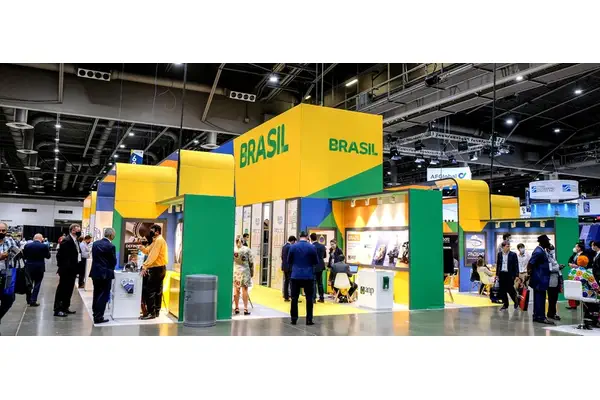
Brazil in the Modern World: A Rising Power of People, Trade, and Technology
Level: B2
Brazil is much more than just football, music, and the Amazon rainforest, although these are parts of its soul. In the 21st century, Brazil is also a global player shaping the world through trade, technology, diplomacy, and culture. With its large population, rich natural resources, growing tech sector, and active role in international groups like BRICS, Brazil’s influence reaches far beyond South America.
A Strategic Global Role
Brazil is the fifth-largest country in the world by population and land area. It occupies about half of South America, and its economy is one of the most important in the region. Brazil does not only produce food and resources, it also plays a political and diplomatic role in the global arena.
One major way Brazil influences the world is through its membership in BRICS, a group of major emerging economies that includes Brazil, Russia, India, China, and South Africa. In 2025, Brazil hosted the 17th BRICS Leaders Summit in Rio de Janeiro, where leaders agreed to cooperate on issues like trade, global health, economic development, and technology.
Being part of BRICS gives Brazil a platform to voice its interests, work with large partner countries, and build new systems for trade and investment. For example, BRICS discussions have included ideas for alternative financial systems and joint development projects, which show how Brazil seeks influence beyond existing Western-led economic structures.
Strong Industries and Natural Wealth
Brazil’s economy is neither simple nor small. It is diverse, with important sectors in agriculture, technology, manufacturing, services, and natural resources. Thanks to this variety, Brazil has become a major global exporter of soybeans, beef, iron ore, and food products. It also has growing technology industries and a dynamic digital economy.
In fact, a recent strategy report shows Brazil’s vast natural resources, including minerals like copper, nickel, and graphite, as well as fertile land and freshwater, position it as a key supplier in world markets. The country also produces biodiesel and ethanol, strengthening its role in clean energy solutions.
Moreover, Brazil’s largest urban economy, São Paulo, is a major financial and innovation hub. It hosts Latin America’s biggest stock exchange and significant scientific research activity, helping attract multinational companies and young professionals.
Digital Innovation and Startup Growth
Brazil is also emerging as an innovation leader in Latin America. The country’s population is highly connected: an estimated 95% of Brazilians use the internet every day. This provides a solid base for digital businesses, startups, and technological development.
Brazil’s digital economy includes financial technology (fintech), software services, and online platforms. The instant payment system called Pix transformed payments in Brazil by enabling people to send money instantly at any time and with low or no cost. Other digital companies like Nubank and innovative fintech startups have expanded across Latin America and serve millions of customers.
Local digital talent supports this growth. Brazil has one of the largest pools of software developers and tech professionals in the Global South, giving it an advantage in digital services and innovation.
Startups and small enterprises also play a key role: in 2024, venture capital investment in Brazilian tech companies reached record levels, reflecting global confidence in Brazil’s potential as a centre for digital innovation.
Trade, Partnerships, and Power
Brazil’s global influence is not only economic, it also stems from its trade relationships and diplomacy.
China and the United States are two of Brazil’s largest trading partners, but Brazil has also built strong ties with countries in Africa, the Middle East, and the Global South. In recent years, Brazil’s share of trade with Global South nations increased, highlighting how it is diversifying its global economic relationships.
Brazil’s involvement in BRICS and expanded discussions with countries like Egypt, Indonesia, and the United Arab Emirates shows it aims to be more than a regional power: it wants to be a global voice for development and cooperation.
For example, in 2025 Brazil’s BRICS presidency emphasised cultural exchanges and creative industries as part of diplomacy, showing how soft power, the influence of culture, arts, and shared values, can be part of global strategy alongside economics and politics.
Challenges Brazil Faces
Even with all its strengths, Brazil also faces major challenges that affect its global role:
- Inequality and Social Development – Despite economic growth, inequality remains a problem, with large gaps in wealth and access to services across regions.
- Environmental and Climate Pressures – Brazil’s role as caretaker of most of the Amazon Rainforest gives it responsibility for global environmental outcomes, but balancing economic development with sustainability remains complex.
- Infrastructure and Modernisation – Improving roads, logistics, and transportation is essential to support industry and global competitiveness.
Some critics also point out that not all Brazilians are deeply aware of complex international alliances like BRICS, suggesting that the average person may focus more on daily life than global geopolitics.
These challenges show that Brazil’s global ambitions are tied not only to economic power but to deep social, cultural, and environmental responsibilities.
Brazil’s Place in the Future
In a world where power is shifting and new alliances are forming, Brazil stands at a crossroads of culture, technology, diplomacy, and natural strength. Its role in global structures like BRICS, its innovative digital economy, and its natural resources give it opportunities to grow in influence and leadership.
But long-term success will depend on how Brazil navigates inequality, environmental expectations, and global competition. If it can balance these factors, the country’s modern story may be a model for emerging economies building influence through creativity, connectivity, and cooperation.
Definitions
Diplomacy – the art of managing relations between countries.
Innovation – the creation of new ideas, technologies, or methods.
Infrastructure – the basic physical systems (roads, transport, internet) that support a country.
Diverse – different and varied; not all the same.
Soft power – the ability of a country to influence others through culture and attractiveness, not force.
🗣️ Seven Conversation Starters
How do you think digital technology changes the way people work and live in Brazil?
Why might a country like Brazil want to build stronger ties with nations outside the West?
What does it mean for a country to have soft power in the world?
How can creative industries (film, music, art) help Brazil’s global image?
What are the benefits and problems of relying on natural resources for a country’s economy?
Do you think being part of BRICS helps Brazil’s position in the world? Why?
How can a large and diverse country like Brazil balance economic growth with environmental protection?


-
-
1 month
Tagged society, South America