
Kenya: Nature, Innovation, and Everyday Energy
Level: B1
Kenya is a vibrant country in East Africa. It is famous for wildlife, beautiful landscapes, long-distance runners, and fast-growing cities. But Kenya is also a country of technology, business creativity, and strong community life.
From wildlife safaris in the savanna to modern mobile banking systems, Kenya shows how tradition and innovation can exist together.
Location and Landscapes
Kenya lies along the eastern coast of Africa, next to the Indian Ocean. It has many different types of landscapes:
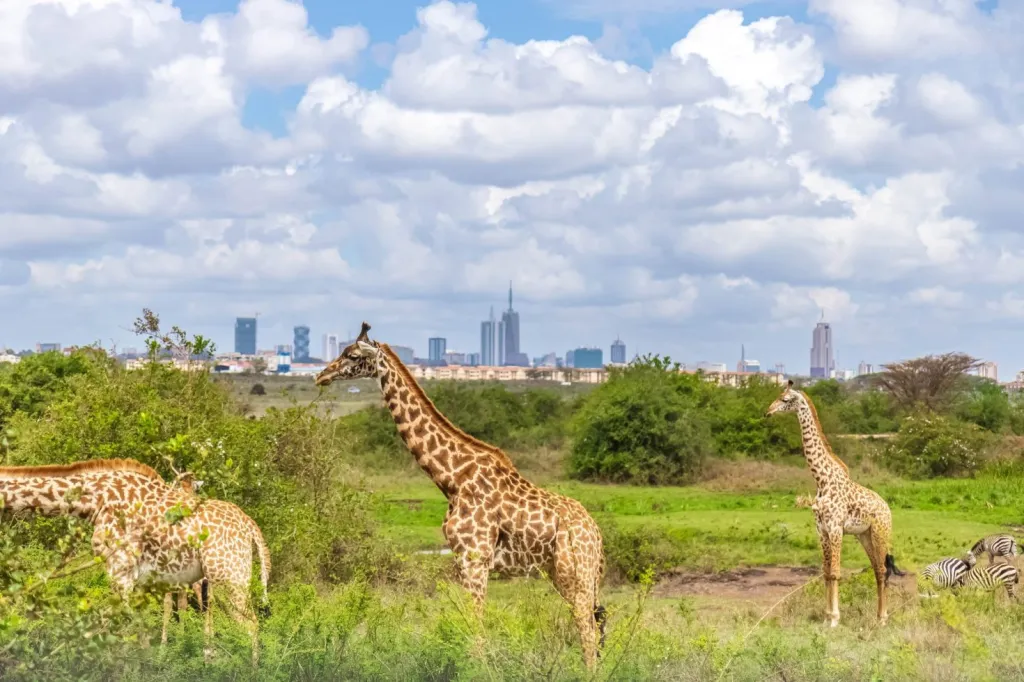
- Savannas with lions, elephants, and giraffes
- Mountains, including Mount Kenya (Africa’s second-highest mountain)
- Lakes in the Great Rift Valley
- Beaches along the coast
Kenya’s national parks, such as Maasai Mara, attract tourists from all over the world. Every year, thousands of animals take part in the famous Great Migration, moving between Kenya and Tanzania in search of food and water.
Tourism is very important for the Kenyan economy because visitors come to see nature, wildlife, and traditional cultures.
Nairobi: A Growing African City
The capital city, Nairobi, is one of the fastest-growing cities in Africa. It is sometimes called the “Silicon Savannah” because of its strong technology sector.
Many international companies and African startups operate in Nairobi. The city mixes modern office buildings with busy markets, small shops, and large shopping centres. Like many growing cities, it also faces challenges such as traffic and inequality.
Mobile Money and Innovation
One of Kenya’s most interesting achievements is its mobile money system called M-Pesa. It allows people to send and receive money using their mobile phones, even without a bank account.
This system changed everyday life for millions of Kenyans. People can pay bills, buy food, or send money to family members in other towns very easily. Because of this innovation, Kenya is often seen as a leader in financial technology in Africa.
This shows that new ideas do not only come from Europe or North America. Kenya proves that innovation can grow anywhere.
Wildlife and Conservation
Kenya is one of the best places in the world to see wild animals in their natural environment. Elephants, rhinos, cheetahs, and zebras live in protected areas.
However, wildlife conservation is an important issue. Climate change, poaching, and human development threaten some animal populations. The government and international organisations work together to protect endangered species.
Protecting nature is not only about animals, it also protects tourism jobs and future generations.
Culture and Daily Life
Kenya has more than 40 ethnic groups, each with its own languages and traditions. The official languages are English and Swahili.
Family is very important in Kenyan society. Many people live in large extended families. Community events, weddings, and celebrations are often big and colourful.
Music and sport are also central to daily life. Kenya is famous for its long-distance runners, who have won many Olympic medals. Running is both a sport and a source of national pride.
Economy and Future Goals
Kenya’s economy depends on agriculture (such as tea and coffee), tourism, technology, and services. Many young Kenyans are starting small businesses or working in digital industries.
Like many developing countries, Kenya faces challenges:
- Unemployment
- Climate problems (such as drought)
- Economic inequality
However, it also has strong potential because of its young population and growing digital skills.
Definitions
Innovation – a new idea or new way of doing something
Economy – the system of money, business, and trade in a country
Conservation – protecting nature, animals, and natural resources
Extended family – a family that includes grandparents, aunts, uncles, etc.
Inequality – when some people have much more money or opportunity than others
Conversation Starters
Would you like to visit Kenya? Why or why not?
Why is tourism important for some countries?
Do you use mobile banking in your country? Is it popular?
What challenges do growing cities usually face?
How can countries protect wildlife and still develop their economy?
Why do you think sport is important for national identity?
What makes a country innovative?



-
-
8 months
Tagged Business, Technology